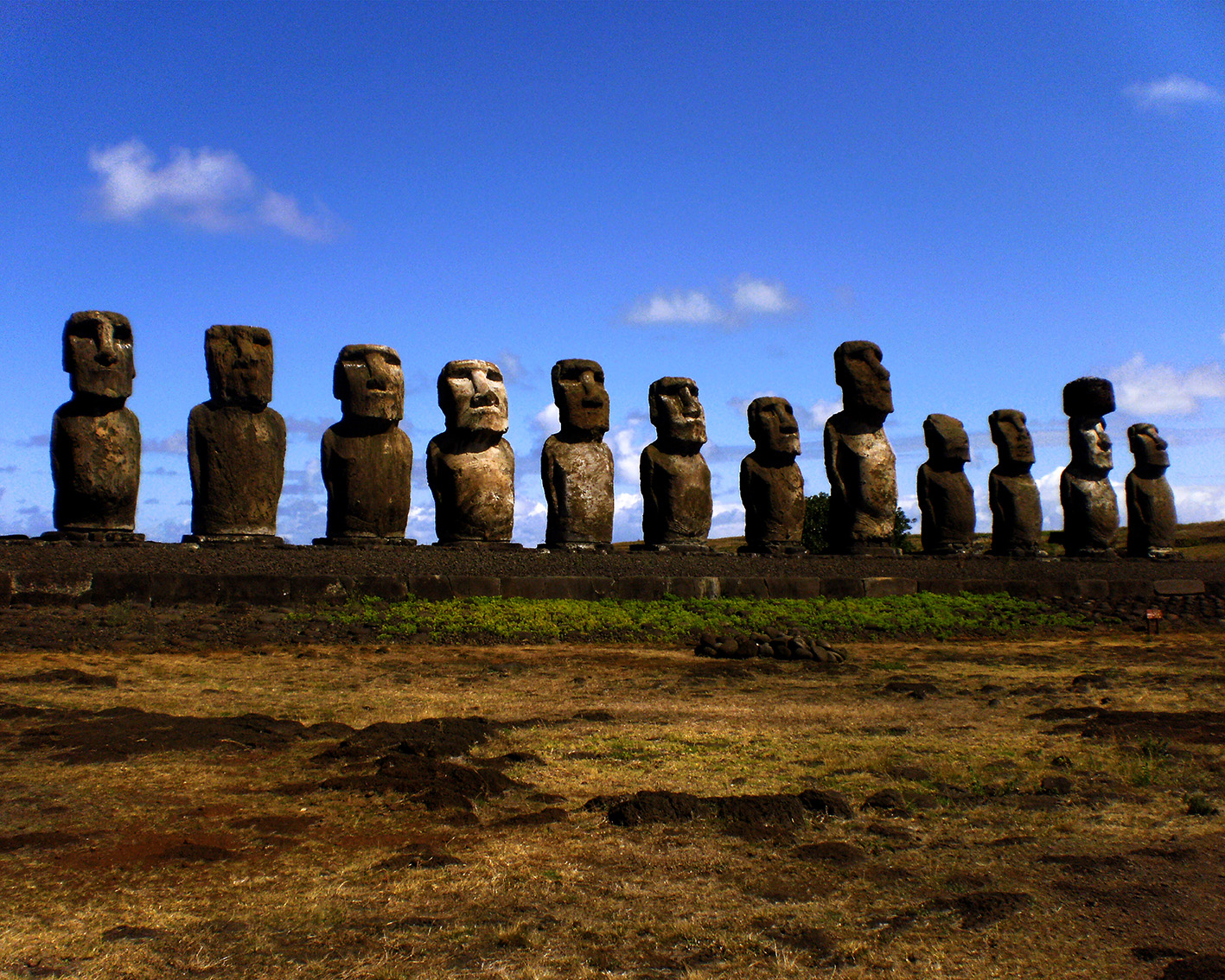
On July 11, 2010, a total solar eclipse was visible from Easter Island. The event attracted thousands of curious visitors, astronomers, and photographers. Many Rapa Nui people celebrated this fascinating natural phenomenon with dances, songs, fires, and rituals in the ancient ceremonial sites in front of the moai. The contrast between the steadfast stillness of the statues and the movement of the people, the brightness and warmth of the day that in just a few moments turned into a cool, starry night, left Easter Island in an unreal silence under the black sun.

In 1877, there were 111 Rapa Nui individuals recorded by missionaries, the last survivors of a civilization already in decline due to genocide, the slave trade, and epidemics. On April 5, 1722, Easter Sunday, Dutch ships arrived at Easter Island, breaking an isolation that had lasted centuries and opening the route to the West, which quickly intruded with force. The King of Spain took possession of the island in 1770, and European, Peruvian, and North American slave traders captured thousands of natives, including the royal family and the astronomer priests, the sole guardians of the Rongo Rongo script. French merchants and missionaries contributed to the destruction of the cultural identity. The current Rapa Nui people are descendants of those 111 survivors.



Rano Kau is the largest volcano on the island, one of the three main craters that formed Easter Island. It reaches a maximum height of 324 meters, and inside it lies a circular freshwater lagoon, 1.6 km in diameter, covered by floating islands made of totora reeds (similar to bamboo). The caldera walls, rich in obsidian, have been used over the years for cultivating various endemic plant species and fruits such as grapes, guava, and bougainvillea, which streak the landscape with fuchsia in summer. Rano Kau is a powerful presence, visible from the town of Hanga Roa. The ancient Rapa Nui people recreated natural greenhouses across the land, called manavai (power of water), stone gardens inspired by the shape of the craters.
The first king of the island, Hotu Matu’a, ordered that children of seven years old be taken to the caves at the foot of the Poike volcano, where they would stay throughout the winter to whiten their skin, so they could participate in the spring ceremonies held in the village of Orongo. They were not allowed to cut their hair and had to feed exclusively on sugar cane and sea shells. They carried ropes with which they entertained themselves, inventing stories about the figures they formed by intertwining them. Today, those caves are open to visitors: inside, there are still petroglyphs and remnants of human bones.
Make Make is the creator god of the world according to Rapa Nui beliefs. Human in form, but with feathers, wings, and a beak, he created mankind by merging his reflection in the water with a bird that perched on his shoulder. It was Make Make who appeared in a dream to the wise Haumaka, advisor to the Polynesian king Hotu Matu'a, revealing the route to a new land. Their island, Hiva, was no longer safe due to tsunamis and volcanic eruptions. Following the god’s instructions, the king sent seven explorers who reached the island, opening the path for the migrations that would populate it.

The two young people in the photo are siblings. The older one is carrying the youngest of five on his shoulders. In families most closely tied to tradition, men take care of the children just as women do: from feeding to personal care. It is common to see fathers with a following of children in the fields, fishing on the coast, on boats, or riding horses. They are transported in the back of pickups, three or four on scooters, or on their shoulders. Sharing daily life is their way of teaching their children their knowledge and traditions, establishing a close relationship and valuing the child, whose presence is accepted in every work and social situation.