
Umor vitreo
Glass in contemporary art
DIGITAL ART
Group exhibition
Church of Santa Maria in Muris, Belmonte Piceno (FM) | July 5, 2025 – July 31, 2025
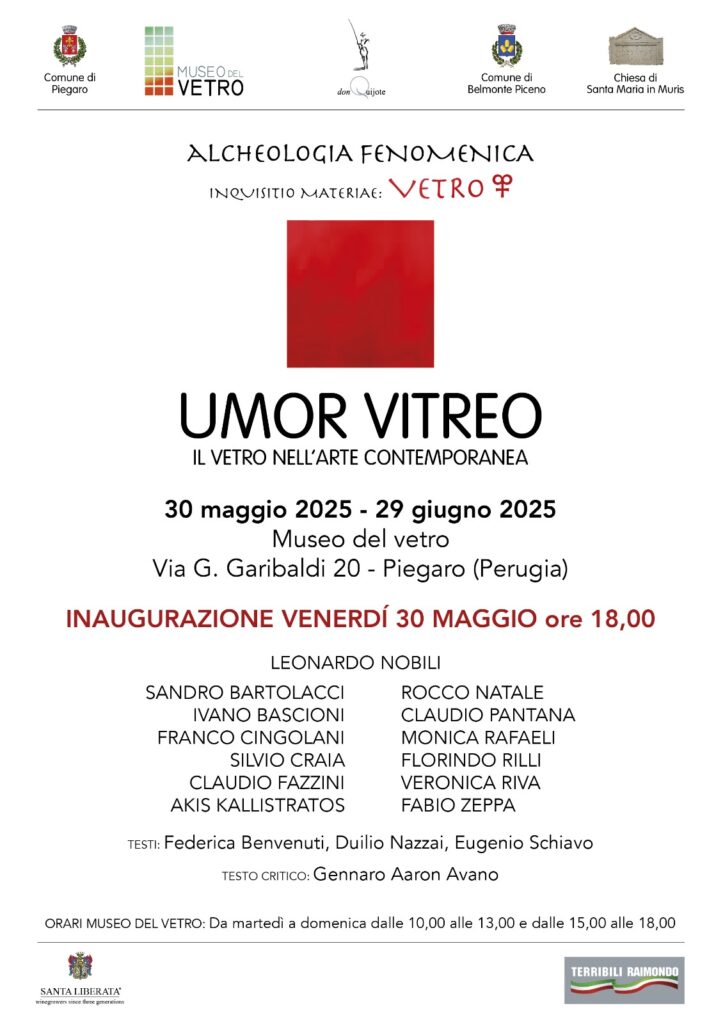
Alcheologia fenomenica: Inquisitio Materiae
Glass in Contemporary Art
Phenomenic Alcheology: Inquisitio materiae is an exhibition project in five stages, dedicated to materials that have marked the history of humankind and art: glass, stone, bronze, paper, and wood. This is not merely an exhibition, but a journey of aesthetic and intellectual exploration, where matter becomes both expression and language, and each material is explored in its profound nature and symbolic value.
The first exhibition, “GLASS – Umor Vitreo”, originates from an idea by Sandro Bartolacci and Claudio Fazzini, in collaboration with the mayor of Belmonte Piceno, Ivano Bascioni. The project involves 13 renowned artists who use glass or transparent, related materials, exploring the visual and symbolic qualities of an ancient substance—at once fragile and resistant, tangible and immaterial.
The exhibition pays tribute to the Marche-based artist Leonardo Nobili, a leading figure in artistic research on glass, capable of transforming it into poetic, essential, and evocative form, experimenting with materials, removing them from the disposable culture practiced by humans, and reviving them in an artistic context.
The exhibition will open on 30 May 2025 at the Museo del Vetro in Piegaro (PG), where it will remain until 29 June. Subsequently, from 5 to 31 July 2025, it will move to the picturesque Marche village of Belmonte Piceno (FM), hosted in the evocative Church of Santa Maria in Muris, a Romanesque gem nestled in the countryside just outside the town gates. The Church of Santa Maria in Muris, with its Romanesque architecture, perfectly fits into the context of this reflection. Its isolated location, immersed in the landscape, gives the exhibition a special atmosphere, where the silence and sacredness of the place blend with the energy of contemporary art.
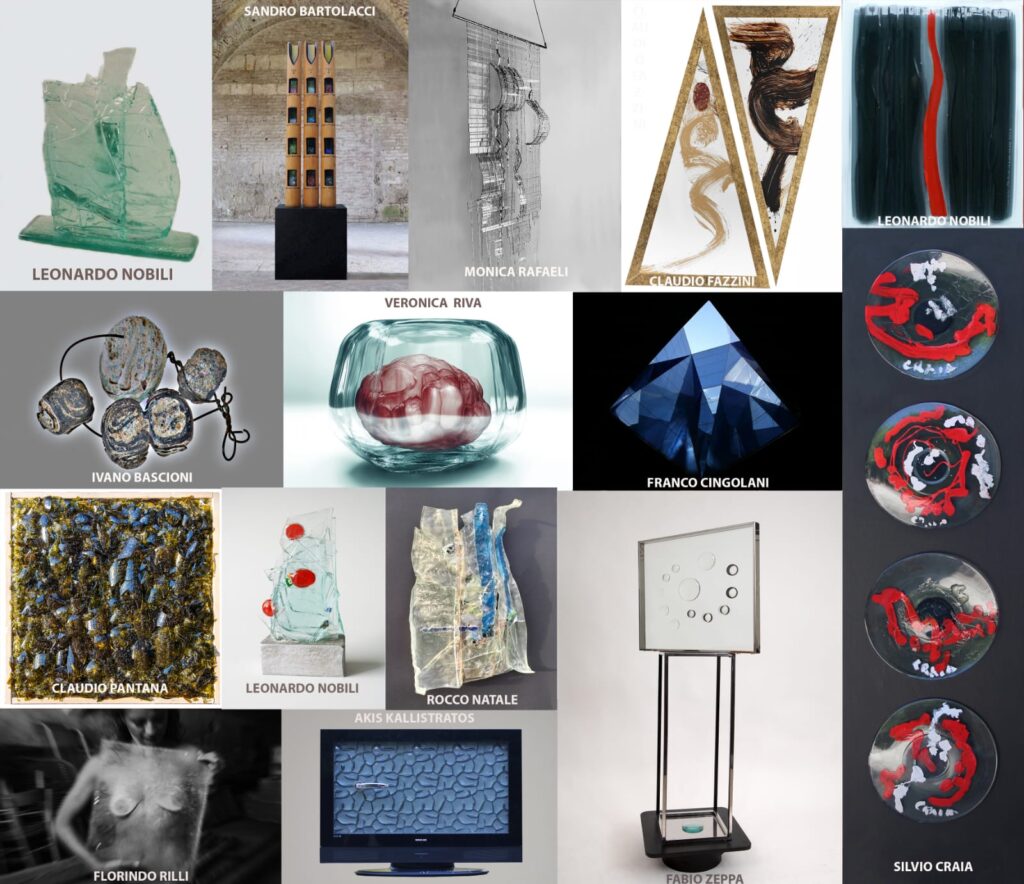
Veronica Riva – Life in Glass (2025)
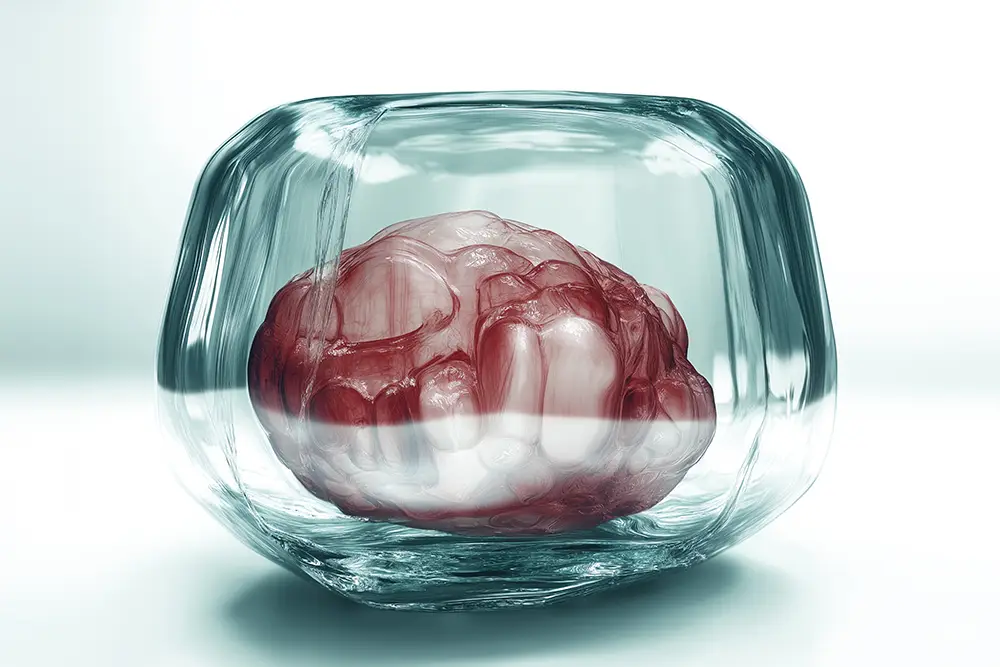
Vita in vetro by Veronica Riva is a work positioned at the intersection of biology, technology, and the poetry of matter. In an era where the human body is increasingly observed, analyzed, and at times rendered abstract by scientific imagery, the artist makes a profoundly human gesture: a return to origins.
At first glance, we are faced with a translucent, contained, silent form. But within this glass uterus—clear and unforgiving like a museum display case—pulses the embryo of an entire existence. It is not a fetus, but a blastocyst; not a human being, but its potential. And here lies the artist’s intent: to show the promise, not the fulfillment.
The choice of glass as a physical medium is no accident: it is fragile yet sharp, transparent yet impenetrable. It serves as a metaphor for the uterus and, at the same time, for the contemporary gaze that dissects, archives, and preserves. The digital rendering and the work on texture—achieved through photo editing and graphic processing—do not cancel the corporeality of the piece; rather, they enhance it, carrying the organic into a rarefied dimension, like a spatial echo or a future relic.
Vita in vetro does not merely depict a beginning, but poses a question about the entire trajectory of being. The biological data is visible; what remains unknown is the shape of the soul that will inhabit it. Life begins the same way, but unfolds in different forms. Within the beginning: infinite possibilities.
C.G.
