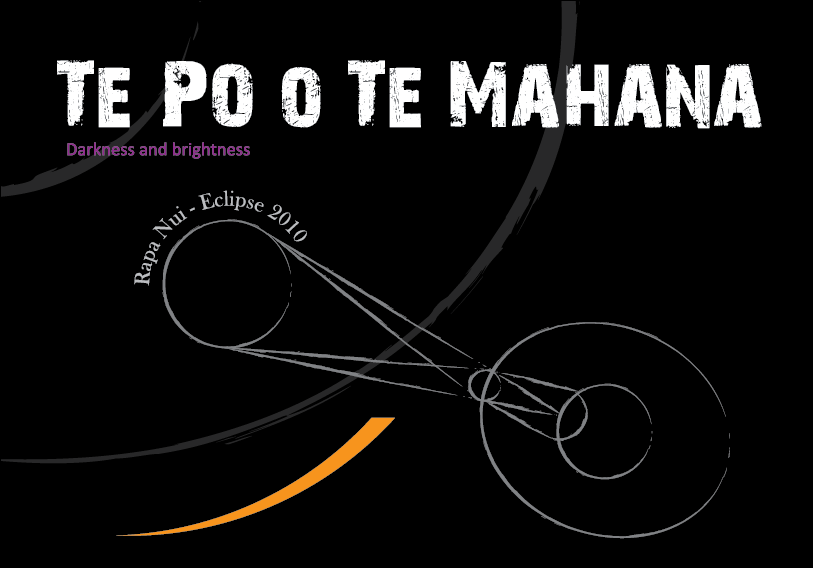
Te po o te mahana - Darkness and brightness

DIGITAL ART

Solo exhibition

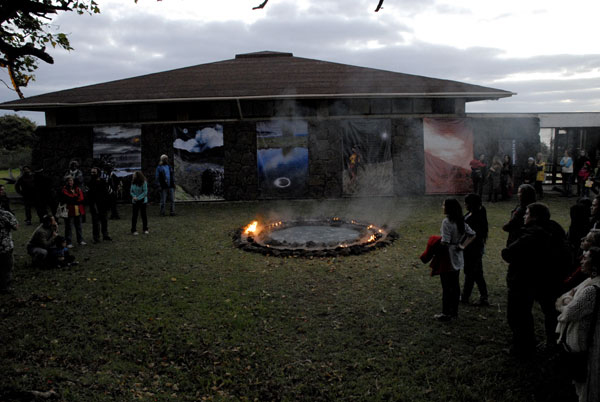
Padre Sebastian Englert Anthropological Museum, Easter Island, Chile (July 2010)

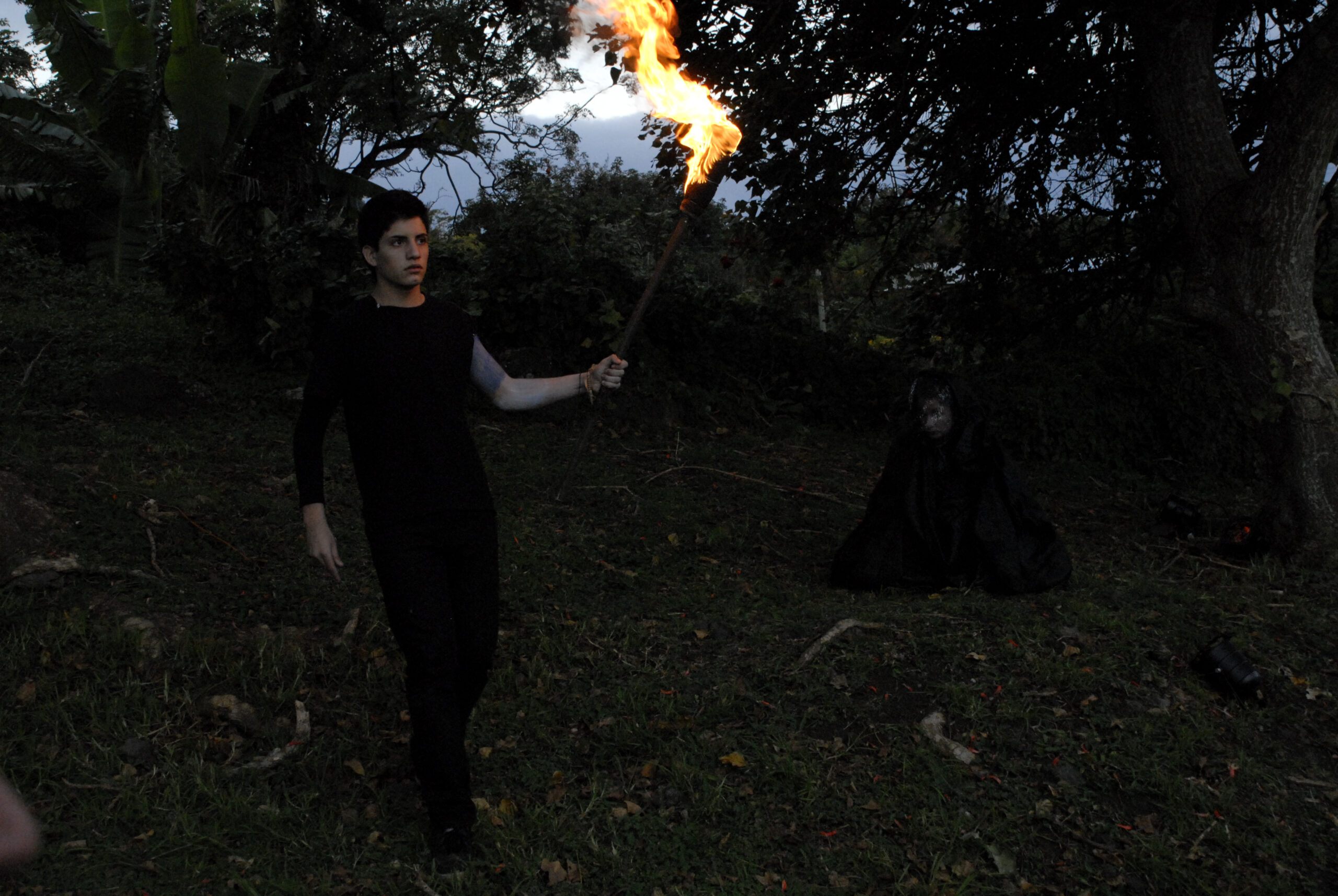
“Nunca volverán la oscuridad y el silencio del Principio. Cada día revela los misterios del Universo. De la oscuridad venimos y hacia la luz es nuestro viaje. Siéntate, mira, ya hemos llegado: estamos en la luz. Vivimos en la conciencia. Somos la vida. Somos el respiro del universo. Somos los ojos de la eternidad.”


“They will never return, the darkness and silence of the Beginning. Each day reveals the mysteries of the Universe. From the darkness, we come, and towards the light is our journey. Sit down, look, we have arrived: we are in the light. We live in awareness. We are life. We are the breath of the universe. We are the eyes of eternity.”

From “El deseo del Universo“, by Veronica Riva.

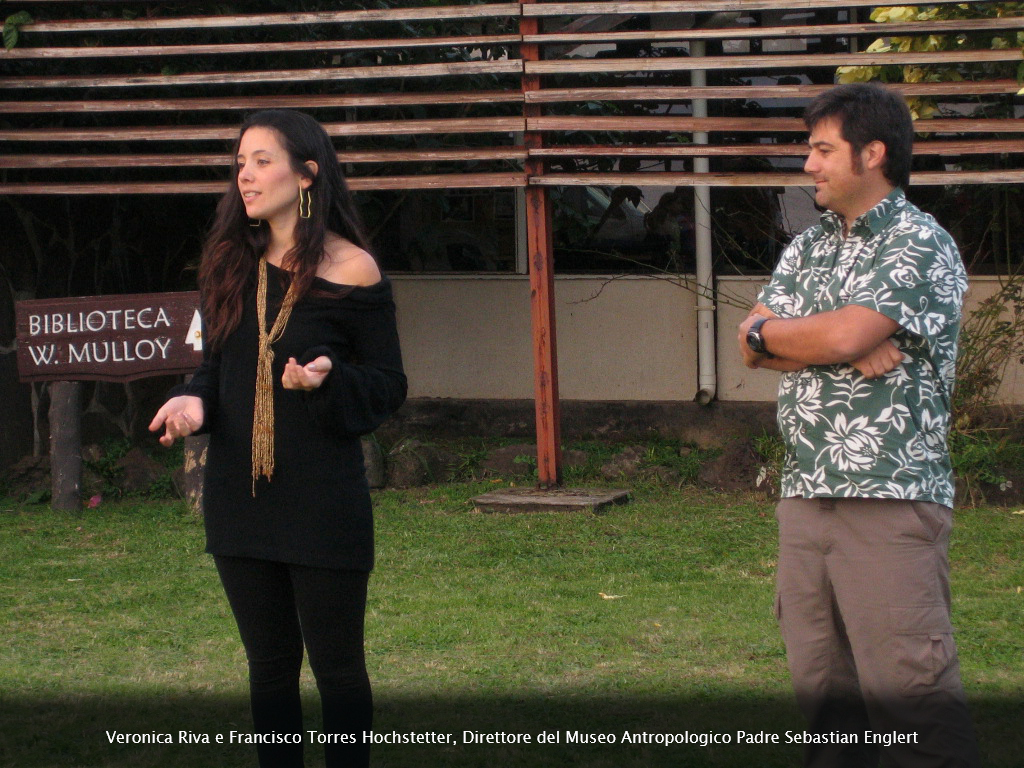
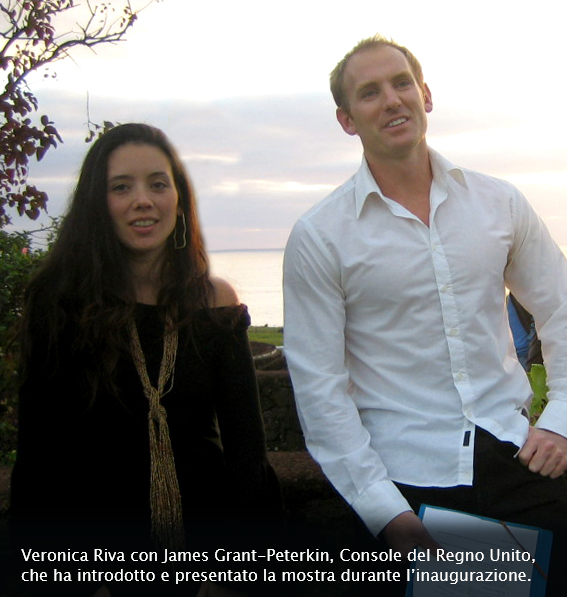
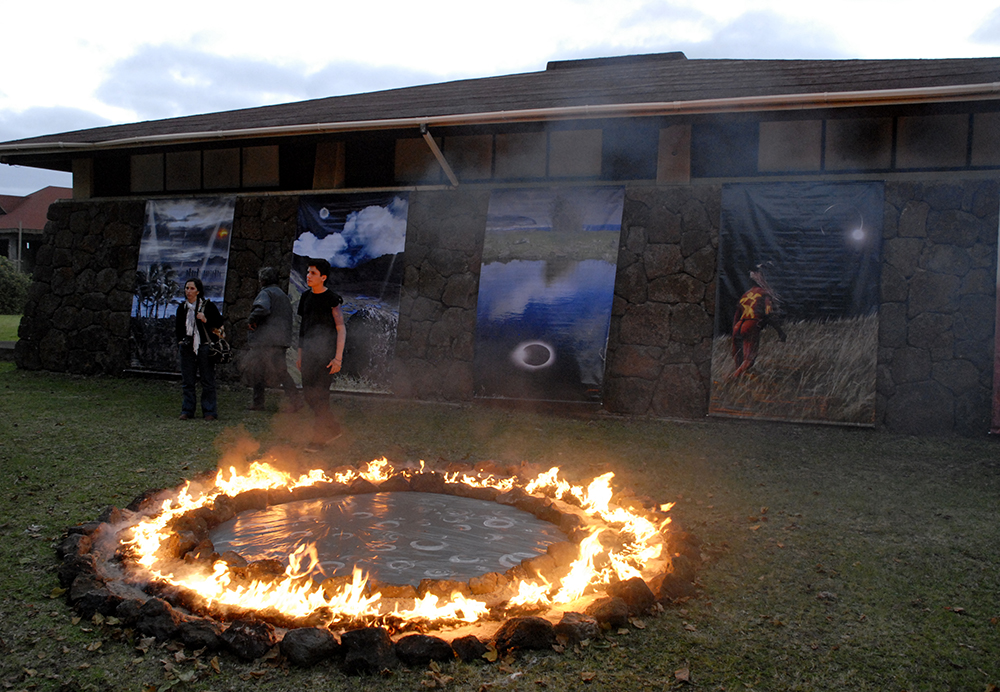
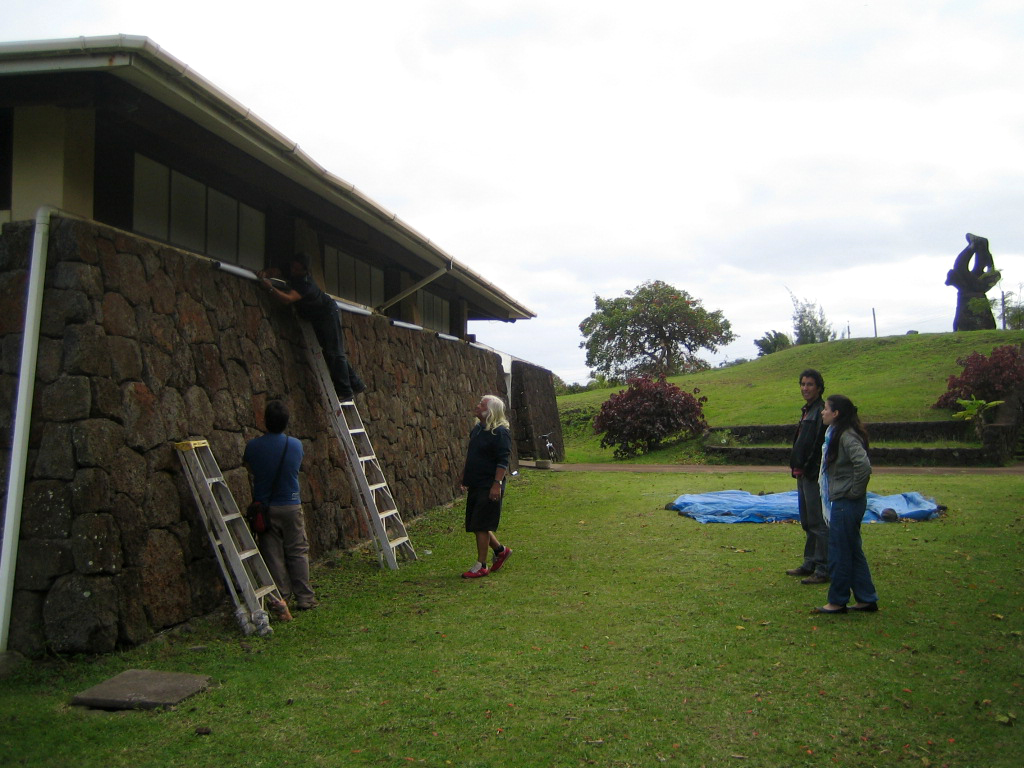
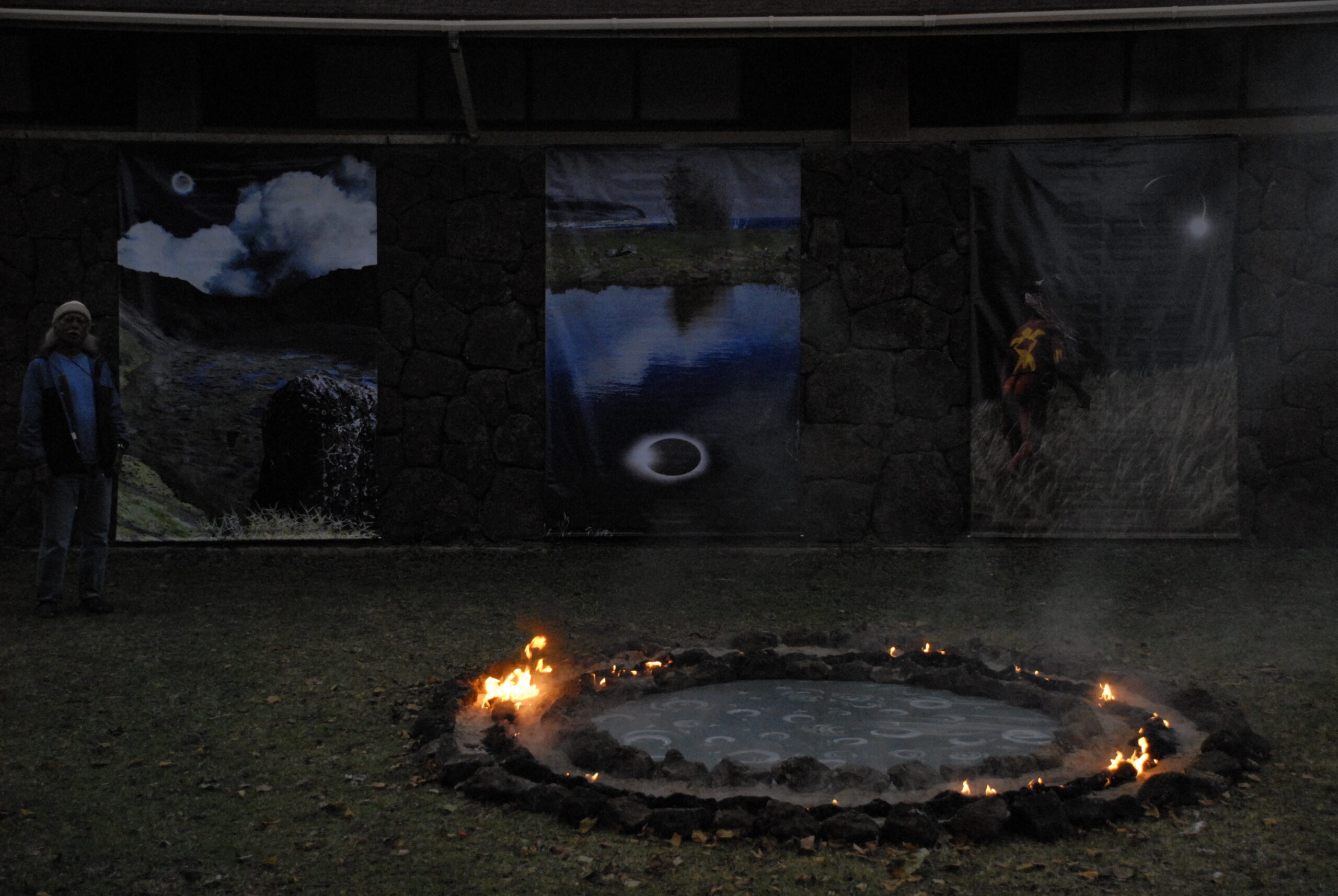
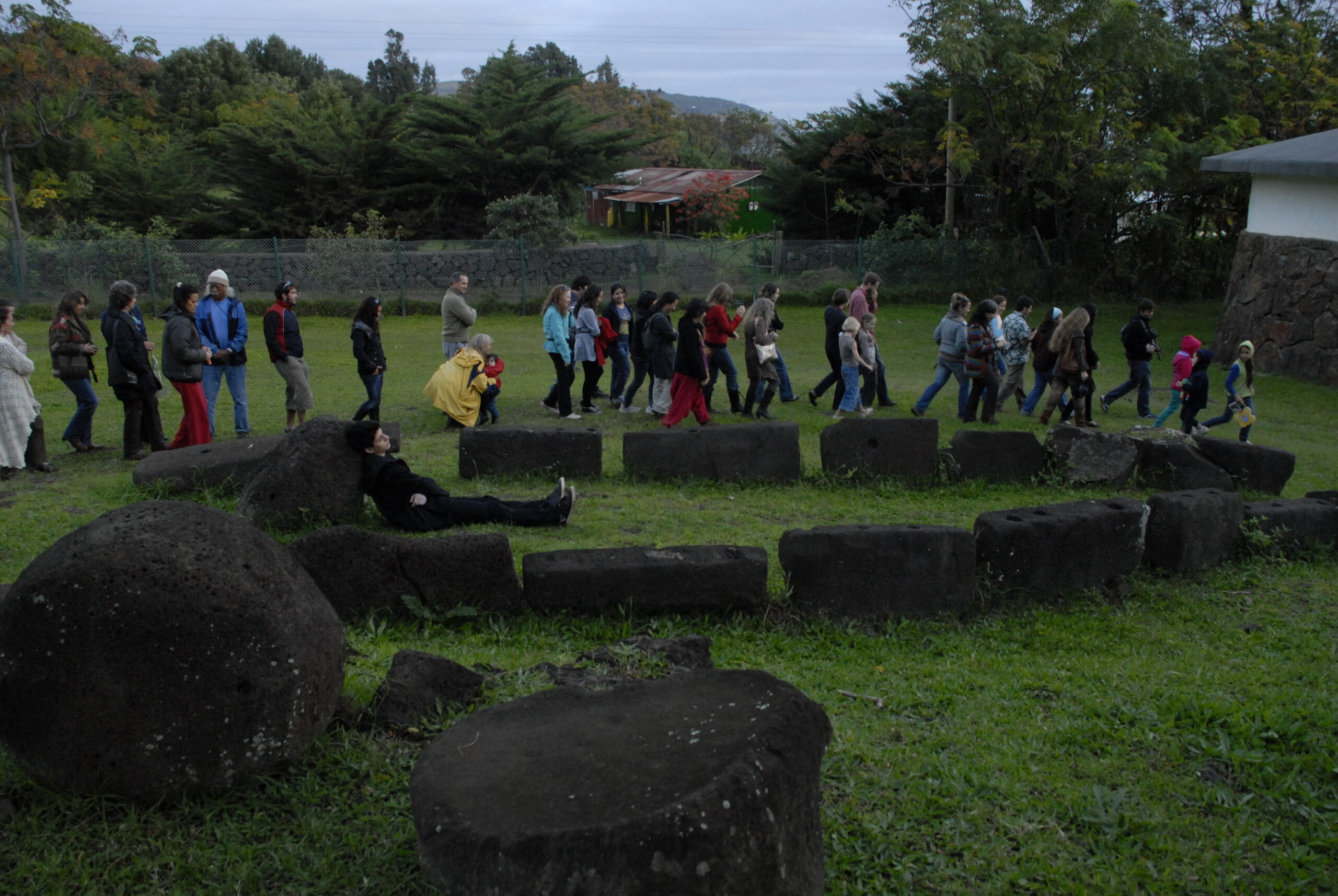
A monologue in two voices, inspired by the origin of life according to Māori mythology, opened the exhibition of five large-format photographs at the Padre Sebastian Englert Anthropological Museum on Easter Island during a total solar eclipse. This rare astronomical event, visible from the island for the first time in 1400 years, occurred on July 11, 2010, and became a source of inspiration for a deep reflection on the ancestral meaning of such phenomena for the Polynesian populations. According to Māori beliefs, everything originates from Te Kore, the primordial void that contains the seeds of the universe. From it arises Te Pō, the darkness, the mysterious realm of the gods, and finally, Te Ao Mārama, the light, the material reality experienced by human beings. The eclipse, with its temporary interruption of light, was interpreted as a sign recalling these ancient myths, symbolizing the passage from chaos to creation. Veronica Riva photographed symbolic places and emblematic phenomena of Easter Island, digitally reworking the images to imbue them with a magical and transcendental element. Her works represent the eclipse as a portal, through which the human being can embark on a transcendental journey that takes them back to the origin of everything, where myth and reality meet in an eternal dialogue.
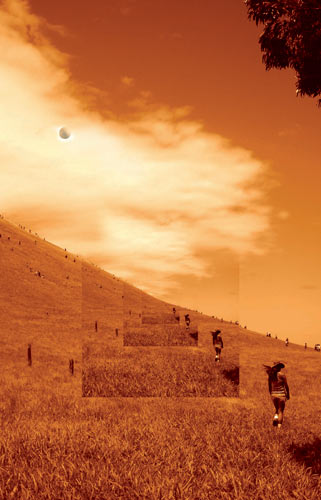
The Tapati Rapa Nui Festival, the main cultural event of Easter Island, celebrates local traditions with competitions in music, dance, arts, and ancestral sports. The hill Maunga Pu’i, represented in the artwork, is the site where the Haka Pei takes place, a spectacular extreme sport involving sliding down plantain trunks. It is also the gathering point for thousands of spectators who watch the athletes’ challenge as they engage in a symbolic climb to the summit. Dressed in traditional attire and adorned with body paint, they perform an ancient initiation rite related to strength and courage.
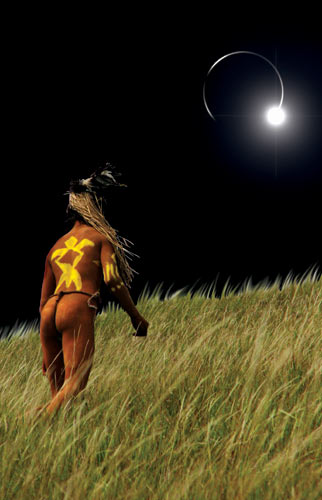
In the second artwork of the series, the essence of the initiation rite is captured through the figure of a young Rapa Nui climbing the hill Maunga Pu’i, dressed only in a hami (loincloth) and with his back adorned with a body painting depicting a Māori turtle, a symbol of strength, endurance, and connection with the spiritual world. The bond between man and the cosmos is represented by the eclipse, a rare and powerful event that, in the ancestral vision, marks the dialogue between light and shadow, between the visible and the invisible. The young man’s ascent thus takes on a symbolic meaning, representing the path of transformation and spiritual growth, where the body merges with the elements and tradition becomes an inner journey.
In an ephemeral landscape shaped by rain, a small temporary lake reflects an eclipse, a sign of the passage between worlds. In the background, the green land stretches to the ocean, dominated by the majestic presence of the Rano Kau volcano, a sacred place for ancient ceremonies and the Birdman ritual, where priests celebrated the bond between humanity and the gods. The water, a mirror of the sky and a portal to the invisible, becomes the meeting point between the earthly realm and the cosmic forces. A fleeting reflection, like a message from the gods, invites contemplation of the mystery of existence and the continuous cycle of creation and transformation.
For the ancient inhabitants of Rapa Nui, the sun was a divine presence, regulating the cycles of life and sacred rituals. The sky was a cosmic canvas where gods and ancestors manifested their will, and eclipses were read as omens. Here, in the land of the Birdman, where the initiation trials took place, the sun splits in two. On one side, the modern eclipse, a sign of cosmic energy in motion; on the other, the ancient symbol carved into the rock, a witness to timeless memory. Two visions meet, between the past etched in stone and the present recreated through the human gaze.
From the slopes of an inaccessible hill, the author captures the image that shows the largest Moai platform in the world, with the statues gazing at the black sun of the eclipse. An ancient yet modern, apocalyptic natural landscape.
photography
art
graphic design


Privacy Overview

This website uses cookies so that we can provide you with the best user experience possible. Cookie information is stored in your browser and performs functions such as recognising you when you return to our website and helping our team to understand which sections of the website you find most interesting and useful.